
Sigma Homes

LONG LIVE UAE

Sigma Homes

Sigma Homes is a Dubai-based owners association and community management company. Our articles cover building operations, service-charge administration, maintenance coordination, and owner and resident communication. For a building-specific management proposal, contact our team through sigmahomes.ae.

Transparent Service Charges in Dubai

Transparent Service Charges in Dubai: Records Owners Can Review

Transparent service charges in Dubai start with records an owner can understand. An invoice should be considered alongside the approved budget, the property’s account information and explanations for the work being funded. For developers, building owners and owners committee representatives, useful financial reporting makes responsibilities and outstanding questions visible. This guide explains the records to ask about and how they relate to the building’s operations. Understanding Your Service-Charge Records Service charges contribute to the management, operation, maintenance and repair of common property. A particular building’s budget and approved arrangements determine the relevant cost categories; a generic online example is not a substitute for those records. If an invoice is unclear, identify the period, unit, amount and item in question. Compare the statement with your payment records and ask the management team for a reconciliation or explanation through the appropriate process. Find out which budget, account and review documents are available to you and how to request them. Ask who can explain an allocation, an adjustment or a significant difference between planned and actual expenditure. A useful report answers practical questions: what was budgeted, what was approved, what was paid and what remains unresolved. Keep the supporting references so a reviewer can trace an item rather than relying on a verbal assurance. Connecting Financial Records to Building Operations Building condition and service arrangements matter to everyday use of the property. Market prices and rents also depend on factors outside management, so financial transparency should not be presented as a guaranteed valuation outcome. The appointed management team should be able to connect contractor scopes, recorded work, invoices and the reporting arrangements in its appointment. Confirm who checks completion and who can approve a variation. Assess performance through the property’s actual records, such as completed and overdue work, recurring faults, reconciliations and complaint follow-up. Avoid assuming a particular reduction in disputes, vacancies or costs without comparable evidence. Service-Charge Information During Due Diligence During a purchase or management review, ask what service-charge information is available through the appropriate route. Use an up-to-date statement and relevant approved records rather than relying on an undated screenshot or another development’s figures. A budget, an audit report and a condition survey answer different questions. Check the date, scope and any qualifications or outstanding findings before treating a document as evidence of a particular conclusion. Missing records or unanswered questions are reasons to seek clarification. They do not by themselves establish the size of a funding problem or a specific reduction in the unit’s value. Clear records can support an informed assessment of the building’s arrangements. They do not establish a future sale price, rental yield or guarantee against market changes. What to Ask the Appointed Management Team Use the management appointment and the applicable property framework to identify the following responsibilities: Budget Planning Budget planning: identify the costs and assumptions behind the proposal, the required review and approvals, and how the final figures will be communicated. Distinguish a draft proposal from an approved charge. Reserve Planning Reserve planning: review the equipment inventory, condition information and expected replacement needs. Article 30 of Dubai’s jointly owned property law addresses reserve and funding arrangements. A reserve plan is not a guarantee that additional needs will never arise. Maintenance Records Maintenance tracking: record the work specified, visits completed, defects found and follow-up required. Keep relevant warranty and contractor information with the asset records, and assess the requirements of the particular equipment. Owner Communication Owner communication: agree what updates will be provided, who receives them and where questions can be raised. Share information through the applicable process and keep a record of responses and outstanding actions. Approvals and Review Approvals and review: use current DLD/RERA information and the building’s approved documents. An approval or review for one task should not be described as proof that every legal or operational obligation is complete. Recognising Gaps and Following Up Repeated defects, unrecorded variations or unexplained differences in an account deserve follow-up. Identify the specific gap, the person responsible for responding and the information needed to close it. When reviewing a concern, distinguish a documented finding from an allegation or an incomplete file. Ask for the relevant report, invoice, approval or response before drawing a conclusion. Review financial and technical information together where a proposed cost relates to a repair or replacement. A low quoted price or a short budget summary alone may not explain the condition, scope or longer-term work required. Discussing a Sigma Homes Appointment Sigma Homes’ management services can be discussed around a development’s financial administration, reporting and common-area coordination requirements. The proposal should identify the work, information and responsibilities involved. Confirm the reporting timetable, contractor coordination arrangements and the process for queries before the appointment begins. Where independent audit or specialist technical work is needed, identify the appropriate parties and their scope. For a new development, include budget assumptions, contracts, asset information and open actions in the handover file. For an existing building, identify which records and reconciliations need to be completed during the transition. Compare prospective managers using their relevant experience, proposed team and deliverables. Ask how the work will be reviewed rather than relying on an unsupported promise of improved property prices or fewer disputes. Next Steps Transparent service-charge administration is a practical recordkeeping and communication process. It helps authorised reviewers connect the charge, the approved arrangements and the work being funded. Start with the current budget, an up-to-date statement and the questions you need answered. Keep a written record of the response and any agreed follow-up. To discuss a Dubai development or an existing building’s management, contact Sigma Homes with the location, number of units, proposed start date and the reporting or operational support required.

Transparent Service Charges in Dubai: Records Owners Can Review Read More »

Community engagement in Dubai driving property value through well-managed residential development

Community Engagement in Dubai: Five Practical Focus Areas

A Practical Approach to Community Engagement Community engagement in Dubai gives residents and owners practical ways to receive information, report concerns and contribute feedback about shared spaces. For a management team, the useful question is whether those channels lead to clear records and follow-up. A newcomer who knows where to report a leak or find a maintenance notice has a clearer starting point than someone relying on informal messages. Agree how information will reach people and how an unresolved issue can be escalated. The approach needs to suit the development: its layout, languages, facilities and resident communication needs. Engagement should be assessed through participation and service records, without promising a particular sale price or rental outcome. Participation and Formal Responsibilities Community engagement includes resident information, feedback, voluntary activities and communication about common areas. It does not replace the formal management responsibilities and approval processes applicable to the property. Dubai’s jointly owned property framework distinguishes the appointed management entity from the owners committee. Residents can provide feedback through the agreed channels, while formal decisions need to follow the relevant responsibilities and procedures. Useful workstreams include: Sigma Homes’ owners association management and community management services can be discussed around the building’s communication, reporting and common-area requirements. Five Focus Areas for the Management Team 1. Reporting and Follow-Up Agree how requests are acknowledged, assigned and followed up. Review unresolved reports and recurring faults, and explain what information is needed before a response or repair time can be confirmed. A communication programme alone cannot guarantee tenant renewals or occupancy. 2. Shared Facilities Ask residents about faults or access problems affecting shared facilities, then compare feedback with the maintenance records and a suitable technical assessment. Improvements still need a defined scope, funding and the approvals applicable to the property. 3. Financial Information Explain where owners can find service-charge information and how to raise a question. Dubai Land Department’s FAQs describe Mollak and related service-charge processes. Confirm which records are available through the appropriate route rather than promising unrestricted access to every transaction. 4. Measuring Participation and Actions Keep participation records, survey results and actions taken so the team can review the programme. If a financial or retention benefit is claimed, it needs a suitable baseline and supporting evidence; a general market-research link is not proof of a result for this building. 5. Activities and Amenities Review proposed activities or amenity changes for actual need, accessibility, cost and ongoing upkeep. Ask whether residents can use the space as intended and who will maintain any new equipment or landscaping. Agreeing a Sigma Homes Management Scope Before a management appointment, agree the communication channels, reporting responsibilities and process for handling feedback. At handover, make sure resident information reflects the facilities, contacts and outstanding actions that actually apply. A development may need coordination across these service areas, with the specific work confirmed in the appointment: Explore Sigma Homes’ services and identify which elements are relevant to your building. Preparing for Handover or a New Appointment Developers and building owners can prepare the following information before discussing an appointment: Frequently Asked Questions Reviewing the Programme A practical engagement programme makes it easier to find official information and raise concerns. Review what residents use, which reports remain unresolved and whether actions are communicated clearly. Judge progress through the community’s records and feedback. Financial performance and property prices depend on many factors, so engagement should not be sold as a guarantee of higher returns. For a development approaching handover or reviewing its management arrangements, contact Sigma Homes with the location, number of units, expected start date and the communication or operational support required. Sigma Homes — Owners Association and Community Management in Dubai. About Us | Our Services

Community Engagement in Dubai: Five Practical Focus Areas Read More »

sustainability in community management – energy efficient residential building Dubai

Sustainability in Community Management in Dubai: Energy, Water and Waste

Introduction Sustainability in community management means making practical decisions about energy, water, waste and shared assets. For Dubai developers, owners and management teams, a useful plan starts with the building’s actual consumption, equipment condition and operating requirements. The short answer: Review utility records, assess improvement options and agree measurable targets for your building. Prioritise work using technical advice, whole-life costs and the applicable approvals. Track results after implementation rather than assuming a fixed saving or higher property value. What Sustainability in Community Management Means in Dubai in 2026 Measure progress using relevant building records, such as electricity and water consumption, completed maintenance tasks and waste-service reports. Separate the intended benefit of an upgrade from the result actually recorded after it is installed. Sustainability planning should sit alongside the building’s maintenance and budgeting processes. Agree who will review the data, approve proposed work and report progress to owners and the relevant management team. From Awareness to Action Begin with a consumption baseline and a list of improvement opportunities. Monitoring controls, an energy assessment and maintenance records can help identify priorities, but installing a system alone does not establish that a building is operating sustainably. Include agreed sustainability actions in regular management reviews. Assign a responsible person, budget and completion date, then record what changed and whether the expected benefit was achieved. Practical Measures for Existing Communities In an existing community, practical measures may include reviewing lighting controls, checking cooling-system operation, investigating leaks and improving waste collection arrangements. Choose measures that suit the building and the people using it. Key Areas of Sustainability in Community Management Review six areas together: common-area energy use; water metering and leaks; waste collection and segregation; contractor scope and environmental practices; useful monitoring and controls; and resident communication. Confirm relevant requirements and contractor responsibilities before changing an operating process. Choose a small set of indicators that can be measured consistently. Use the results to decide which actions to continue, revise or investigate further. How Efficiency Measures Can Affect Operating Costs Reducing unnecessary consumption may reduce part of a building’s operating expenditure. The effect on service charges also depends on tariffs, other costs, project spending and the approved budget. DEWA’s energy-efficiency handbook explains that indicative savings are project-specific and that the handbook does not replace an energy audit. Assess BMS settings, lighting and other options for your property before estimating savings. Measure results against a defined baseline after the work. When assessing an investment, compare operating costs, comfort, maintenance needs and the expected life of the equipment. Market demand and valuation depend on many factors; an efficiency measure alone does not establish a rent, resale or occupancy premium. What Dubai Regulations and Initiatives Mean for Communities DEWA’s handbook provides an official starting point for reviewing electricity and water efficiency measures. Use it to prepare questions for a qualified technical adviser, then assess the suitability and costs for your property. Check which regulations, permits and programme conditions apply to the particular building and proposed work. Avoid assuming that every green-building rule or retrofit incentive applies to all existing communities. Organising the Work and Reporting Results Management teams can coordinate records, technical reviews, quotations and follow-up. Agree the scope and reporting responsibilities before committing to a project. Sigma Homes’ community management services can be discussed as part of a building’s operating and maintenance plan. Ask the team to define the proposed scope, responsible parties and reporting arrangements for your property. Key Takeaways Frequently Asked Questions Turning the Plan into Action A practical sustainability plan connects the building’s records to specific actions and a review schedule. Start with reliable data, assess the options and report the results in a form owners and management teams can understand. To discuss community operations and maintenance coordination, contact Sigma Homes at +971(4) 554 5670 or info@sigmahomes.ae.

Sustainability in Community Management in Dubai: Energy, Water and Waste Read More »

Resident Safety Tips During Dubai Rain

Rain Safety in Dubai: A Guide for Residents and Building Teams

Rain safety in Dubai starts with preparation, official weather alerts and a clear way to report building problems. This guide provides general steps for residents and building teams before and during adverse weather. Check the latest National Centre of Meteorology warnings for conditions and timing in your area. Plan ahead while conditions are safe. Know your building’s reporting contacts, keep essential communications available and follow instructions from the relevant authorities. If an official instruction changes, use the latest instruction. For developers and management teams, preparedness includes drainage, equipment access, contractor arrangements and clear resident communication. The plan should identify responsibilities before bad weather arrives. Preparing for Adverse Weather Follow official warnings and avoid unnecessary travel during hazardous conditions. Use a safe sheltered location and comply with any evacuation or access instruction issued by the authorities or responsible emergency team. Dubai Municipality’s rainy-season guidance asks residents to follow official alerts and highlights the importance of functioning building drainage. Checks or repairs to common systems should be organised through the responsible management team and appropriately qualified contractors. Here’s what to do immediately: Prepare early where possible. Do not expose yourself to strong wind, flooding or other hazards to move belongings, inspect a roof or retrieve a vehicle. Safety Reminders for Residents Conditions can differ between locations. Check the current official guidance before travelling or using exposed shared areas, and report hazards through the appropriate route. How to Stay Informed Use official sources for current forecasts, warnings and transport information: Read the date, location and validity of an alert before acting on or sharing it. Avoid treating an old weather post or an unverified forward as a current warning. Check messages from your appointed building management team for property-specific access or maintenance information. Confirm the reporting contact and emergency arrangements rather than assuming a routine enquiry inbox is monitored for emergencies. How to Support Neighbors and the Community Help neighbours in ways that are safe. A phone call or message may be more appropriate than entering an affected corridor, basement or outdoor area. How Sigma Homes Helps During the Rain A building’s weather-response plan should identify the responsible contacts, available contractors and how urgent reports will be prioritised. Ask your appointed management team where to find those arrangements. Before forecast adverse weather, the responsible team should arrange appropriate checks of drainage and relevant building systems, record identified defects and confirm contractor availability. Work on roofs, electrical installations or other hazardous areas belongs with qualified personnel. During an incident, record reports and communicate confirmed access changes or instructions through the agreed channel. Do not promise a repair time before the responsible team has assessed the issue and the safety of access. For routine building-management enquiries, use Sigma Homes’ Contact Us page or discuss its community management services. For immediate danger, use the relevant emergency service rather than waiting for a routine enquiry response. Quick Safety Checklist Use this as a preparation and reporting checklist alongside current official instructions: Conclusion Prepare before conditions deteriorate, use official alerts during an event and arrange assessment of reported damage afterward. The actions needed depend on the location, building and current instructions. Residents can help by reporting clear details from a safe location, following access instructions and avoiding hazardous areas. Building teams need a documented process for assessing and following up those reports. Developers preparing a handover should include drainage records, relevant equipment information, open defects and response contacts in the information transferred to the incoming manager. Sigma Homes’ project management support can be discussed around the development’s requirements. Keep current reporting contacts accessible and review the plan when responsibilities or building arrangements change. Contact Sigma Homes | Community Management Services | Explore Our Services

Rain Safety in Dubai: A Guide for Residents and Building Teams Read More »

building community in Dubai through upgraded shared outdoor amenity spaces in a residential development

Building Community in Dubai: Six Practical Ideas

Building community in Dubai starts with everyday arrangements that help residents find information, use shared spaces considerately and take part where they choose. A programme can be simple, provided someone is responsible for organising it and following up feedback. The appointed management team, owners committee and residents have different roles. Agree the scope, resources and approvals before starting an activity. The six ideas below can be adapted to the building’s facilities and communication needs. Why Building Community in Dubai Matters Residents may have different languages, schedules and preferences. Offer clear information and accessible ways to participate, including alternatives for people who do not use a particular app. Use participation, feedback and completed actions to review the programme. Record what residents found useful and which questions or problems still need a response. For building owners and developers, the planning task is to identify responsibility, cost and ongoing upkeep. Keep the activity plan connected to the building’s actual arrangements. Six Practical Ideas for Your Community Strategy 1: Create a Shared Digital Noticeboard Use a managed noticeboard or an opt-in communication channel for confirmed building information. Explain who can post, how corrections are made and where residents should report a problem. Provide another way to receive important information. Strategy 2: Launch a Green Spaces or Gardening Initiative Ask residents about suitable improvements to a shared outdoor area, then check the permitted scope, budget and ongoing care. Agree who maintains plants or equipment before inviting volunteers to take part. Strategy 3: Run Seasonal Celebrations Choose a suitable venue, timing and budget for a voluntary community activity. Check the approvals and access arrangements relevant to the event, communicate the practical details and consider different resident needs. Strategy 4: Establish a Resident Feedback Loop Use a short survey or reporting form to collect feedback about a specific topic. Summarise the response and explain which actions are agreed, still being reviewed or outside the team’s authority. Strategy 5: Partner with Local Businesses If a local business offers a resident benefit, explain its conditions, any costs and who is responsible for the arrangement. Participation should be voluntary, with an appropriate process for any information the resident chooses to provide. Strategy 6: Invest in Shared Amenity Upgrades Assess an amenity proposal against condition, resident use, accessibility, cost and future maintenance. Follow the required approval process and communicate the scope and planned disruption before work starts. The Management Team and Owners Committee The management appointment should explain who coordinates communication, contractor work and records. The owners committee’s role and any required approvals remain part of the property’s formal arrangements. Getting Every Resident Involved Make participation straightforward: short invitations, clear times, accessible information and a simple way to give feedback. Review who is being reached and offer alternatives rather than assuming everyone will join the same channel. A volunteer contact or ambassador can help direct neighbours to official information. Keep the role clear and voluntary; it should not be treated as authority to approve work, enforce a penalty or access private management records. Your Next Step Residents can ask where official notices, activities and reporting contacts are available. Owners can review how the existing management appointment handles communication and follow-up. For a development approaching handover or an existing building planning a new appointment, discuss the requirements with Sigma Homes. Include the location, number of units, proposed start date and the support needed. Final Thoughts A useful community programme is one that people can understand and the team can maintain. Review the activity, participation and actions taken, then adjust the plan using the feedback received.

Building Community in Dubai: Six Practical Ideas Read More »

Fire Fighting System PPM Dubai: Keeping Communities Safe and Compliant

Fire Fighting System PPM in Dubai: Planning and Records

Fire fighting system PPM in Dubai is planned preventive maintenance for a building’s fire and life-safety installations. Developers and appointed management teams need a clear asset list, an appropriate maintenance scope, competent contractors and records of defects and follow-up. The schedule and required approvals must be established for the actual systems and building. What Is Fire Fighting System PPM? PPM means planned preventive maintenance. It includes inspections, testing and servicing arranged before a reported failure. Corrective repairs address faults identified through those checks or reported during operation. A useful programme links the two processes so a recorded defect reaches the person responsible for action. The required tasks and intervals depend on the installed equipment, approved design, applicable standards, manufacturer instructions and current authority requirements. Ask the responsible qualified contractor to document the basis for each task rather than applying one generic calendar to every component. Use current Civil Defence requirements and the building’s approved documents when specifying work. Dubai Civil Defence’s emergency-action-plan guidance also emphasises using competent professionals for life-safety system inspections and tasks requiring specialist training. Why Fire Fighting System PPM Dubai Communities Cannot Ignore A maintenance programme should make defects, missed tasks and outstanding actions visible to the responsible team. A completed checklist is not a guarantee that every system will operate in every emergency. Core Components Covered by a Fire PPM Programme Start with an inventory of the systems actually installed. Depending on the building, the scope may include: Common Failures When Maintenance Is Reactive Examples of issues that a qualified maintenance team may need to assess include: Record the finding, location, immediate risk assessment, responsible contractor and follow-up required. Do not ignore an alarm fault or ask untrained staff to carry out specialist work. How a Professional OAM Runs Fire Fighting System PPM At handover, the developer and incoming management team should agree how approved designs, asset registers, manuals, test records, warranties and open defects will be transferred. The maintenance appointment needs to identify responsibilities and the arrangements for urgent issues. When discussing Sigma Homes’ management scope, confirm how contractor coordination, access arrangements, records and resident communication will be handled. Specialist technical work and certification should be assigned to appropriately qualified and authorised parties. The management workstream can include these steps: For related responsibilities, see Sigma Homes’ owners association management services and community management services. Confirm the specific technical and administrative scope required for your development. Quick Compliance Checklist for Owners Committees Use the following as questions for the appointed management team and fire-safety contractor: Conclusion A fire-safety maintenance plan needs clear ownership, appropriate specialist work and follow-up on defects. Review the plan against the systems on site, current requirements and the building’s emergency arrangements. Keep inspection and maintenance records organised so the responsible management team and authorised reviewers can identify completed work, outstanding defects and the evidence supporting closure. For a development approaching handover or reviewing its management arrangements, contact Sigma Homes with the building details, current maintenance scope and the records available. Agree responsibilities and deliverables before the appointment begins.

Fire Fighting System PPM in Dubai: Planning and Records Read More »

RERA compliant community management UAE

Community Management in Dubai: Governance and Handover

Community management in Dubai brings together the administration, financial records, contractor coordination and resident communication needed to operate shared property. For developers preparing a handover, the practical question is who will take responsibility for each task and what information they will receive. Dubai’s jointly owned property framework distinguishes the appointed management entity from the owners committee. Sigma Homes’ owners association management services can be discussed around the development’s requirements, with responsibilities and reporting arrangements set out in the appointment. What Community Management Includes Community management commonly includes budgeting, owner communication, service-charge administration and oversight of shared facilities. Facilities management commonly covers the technical and operational services involved in maintaining those facilities. Contract scopes can overlap, so the appointment should explain who does what. Financial administration should follow the approvals and account arrangements applicable to the property. Dubai Land Department’s jointly owned property FAQs explain Mollak, management-company registration and approved service-charge processes. Agree how the management team will record decisions, reconcile expenditure, monitor contractors and hand over information when an appointment changes. Clear records help owners and other authorised reviewers understand how the property is being managed. Why Community Management Matters After Project Handover Before handover, identify the information needed to start operations: asset registers, warranties, manuals, current contracts, inspection records, open defects and the contact responsible for each issue. Check that payment records can be reconciled, contractor scopes are documented and unresolved actions have an owner and a due date. Record missing information rather than treating an incomplete handover file as complete. A transition plan should show which services must be operating at occupation, which tasks remain outstanding and how residents will receive updates. Review readiness against the actual records and site condition. What Professional Community Management Includes A management scope can cover the following workstreams, with the deliverables agreed for the particular development: Financial administration: preparing budgets, coordinating the required review and approvals, issuing invoices through the applicable process, reconciling receipts and reporting expenditure. Confirm the audit and reserve arrangements that apply to the property. Contractor oversight: documenting the service specification, evaluating proposals, checking relevant approvals and insurance, recording performance and managing renewal dates. Clarify who can approve a commitment or a variation. Maintenance coordination: tracking inspections, planned work and defects, with specialist contractors responsible for their technical tasks. A preventive maintenance framework should reflect the building’s assets and requirements. Resident communication needs a clear reporting and escalation route. When discussing a Sigma Homes appointment, agree the work included, information required, reporting frequency, contractor responsibilities and arrangements for urgent issues. Confirm any service-specific requirements before the start date. RERA Compliance and Community Governance in Dubai Use Dubai Law No. 6 of 2019 and current DLD/RERA guidance to establish the applicable framework. Article 23 addresses owners committee meetings, while Article 24 sets out the committee’s role. An owners committee meeting should not be presented as a general meeting that transfers all management or approval powers to residents. The management entity should be able to explain its registration and appointment, the building’s approved documents and the route for referring unresolved matters. Where a responsibility or approval is unclear, confirm it with the relevant authority or a qualified adviser. Owners can ask which financial reports and supporting records are available through the applicable process. Clear information helps a reviewer assess the management arrangements; it does not guarantee a particular property value or dispute outcome. How Developers Benefit from Structured Community Management Dubai For developers, early planning can identify missing handover information and operational dependencies before occupation. Agree the resident onboarding process, account setup and maintenance contacts so each team understands its role. A documented complaint process helps the team track reports, evidence, responses and outstanding actions. Measure response and closure performance using the development’s records rather than assuming that a particular structure eliminates disputes. Prospective purchasers and occupiers may consider building condition, records and service arrangements alongside other factors. A management approach should be assessed on its actual work and reporting, without promising a resale premium. Plan for future manager transitions as well as the first handover. Specify the records to transfer, the data export format, access responsibilities and unresolved items. Keep financial and technical records usable by the next authorised team. How to Identify a Well Managed Community Compliance indicators: Red flags to avoid: Conclusion Community management combines operational coordination with financial administration and communication. A useful governance arrangement makes responsibilities visible and gives owners and developers a way to review the work against agreed requirements. For a Dubai development approaching handover or considering a management appointment, request a proposal from Sigma Homes. Include the building location, number of units, expected start date and the financial or operational issues that need attention.

Community Management in Dubai: Governance and Handover Read More »

Illustration of residents reviewing community documents together

RERA Compliance in Dubai: Documents and Questions for Residents

RERA compliance in Dubai concerns the rules and oversight for jointly owned property. For owners and residents, a practical starting point is to understand who manages the building, how approved service charges are explained and where to report a problem. Dubai Land Department’s jointly-owned property FAQs explain key service-charge and complaint processes. Use official guidance alongside your building’s records when raising a concern. This guide provides questions to ask about management, financial records and maintenance. A checklist supports a review; it does not certify that a building meets every applicable requirement. RERA Compliance in Dubai: Where to Start Dubai Law No. 6 of 2019 sets out the jointly owned property framework, including management entities, owners committees and service charges. Topics to Check: Keep the relevant documents and correspondence together. If something appears inconsistent, ask for an explanation and identify the authority or qualified adviser appropriate to that issue. Understanding Shared-Property Responsibilities Jointly owned properties can include buildings or developments with individually owned units and shared parts. Confirm which facilities are common, who maintains them and which documents govern their use. Common concerns to investigate include: The management framework should be checked against current official legislation and the documents applicable to the property. Do not treat a marketing label or a missing document alone as proof of compliance or a violation. Maintenance and Safety Questions for Residents Ask for the Applicable Maintenance Arrangements Lift Safety: Fire Safety: Pool Safety: Planned Maintenance Ask for an asset-based maintenance plan and the basis for its task frequencies: Clear Communication For service-charge questions, request a clear explanation of: Explore Sigma Homes’ owners association management services to discuss the proposed administration scope for your building. Financial Transparency Under RERA Annual Budgets When reviewing the budget, ask how the following items are supported: The official Mollak process describes budget submission, audit-firm review and approval. Request the approved budget relevant to the invoice. Service Charge Justification Compare the approved budget with its service scope and actual expenditure. Ask the management company to explain material differences and the basis for its fee. Budget Items to Review: Questions About the Scope: Financial and Audit Records Ask which records are available and how they support the financial reports: Ask the management entity about the appropriate route for owners or the owners committee to obtain financial information. Access to individual documents may depend on the requester and applicable process. Explore community management services and agree how reporting responsibilities will be handled. Information and Participation Requesting Information Ask which of the following records can be provided, through which channel and on what timetable: Owners and Tenants Have Different Roles Owners: Tenants: Complaint Escalation Use the management team’s published contact route and retain a reference for the issue. DLD’s FAQs identify formal channels for common-area service complaints. The correct route depends on the issue; there is no single mandatory four-stage sequence for every complaint or dispute. Contact and Follow-Up Arrangements Confirm the contact arrangements offered for your building: Records to Request When Reviewing Building Management Use the questions below to organise a review with the management entity. A full assessment may require technical or professional advice beyond these records. Review Checklist Financial: Governance: Operations: Communication: Issues That Need an Explanation To discuss a management scope or reporting process, contact Sigma Homes. Direct regulatory complaints through the relevant official channel. Turning Concerns into Specific Questions The table below helps turn a concern into a request for records and an explanation. It does not classify a building as compliant or non-compliant. Area Records to request Question to raise Service charges Approved budget and invoice How do the figures reconcile? Maintenance Plan, completed work and faults Which tasks remain outstanding? Safety Relevant approvals and inspection records Who confirms and closes outstanding actions? Complaints Issue reference and correspondence Who is responsible for the next step? Financial review Relevant financial and audit reports How are material differences explained? Record the explanation, supporting documents and agreed next steps. Refer unresolved concerns to the appropriate authority or adviser for the type of issue. Next Steps for Owners and Residents Start with the appointed management entity, the applicable approved budget and the maintenance and complaint processes for your building. Ask focused questions and retain the responses. Useful review outcomes: a clearer record of responsibilities, costs and outstanding actions. What to Document: Owners and tenants should use the channels appropriate to their role and concern. For a formal dispute, check the current official process and obtain advice relevant to the case. Review contact details and procedures when the management arrangements or building requirements change. Frequently Asked Questions (FAQ) Q1: What is RERA compliance in Dubai? RERA compliance concerns the applicable jointly owned property framework and related requirements. Review official guidance, the relevant approvals and the building’s records; no single checklist establishes full compliance. Q2: Does RERA apply to tenants and owners? Owners and tenants have different roles and obligations. Check the law, tenancy arrangements and published building procedures for the issue concerned rather than assuming they share the same voting or document-access rights. Q3: Who enforces RERA regulations in Dubai residential buildings? RERA has responsibilities under the jointly owned property framework. Other competent authorities may be responsible for particular technical or safety matters. Direct the issue to the relevant authority. Q4: What happens if a building is not RERA compliant? The consequences depend on the requirement and the authority’s findings. Ask for the relevant records and explanation, then use the appropriate official channel if the concern remains unresolved. Q5: How can residents verify their building’s RERA compliance? Ask for the appointed management entity’s details, the applicable approved budget and relevant financial and maintenance records. Check concerns against official guidance; these steps support a review rather than provide a compliance certificate. Q6: Who provides RERA-compliant Owners Association management in Dubai? Check the company’s current registration and agree its scope of appointment. You can discuss Sigma Homes’ owners association management services and the arrangements appropriate to your building. Q7: How do I choose a

RERA Compliance in Dubai: Documents and Questions for Residents Read More »

Preventive maintenance frameworks Dubai high-rise buildings

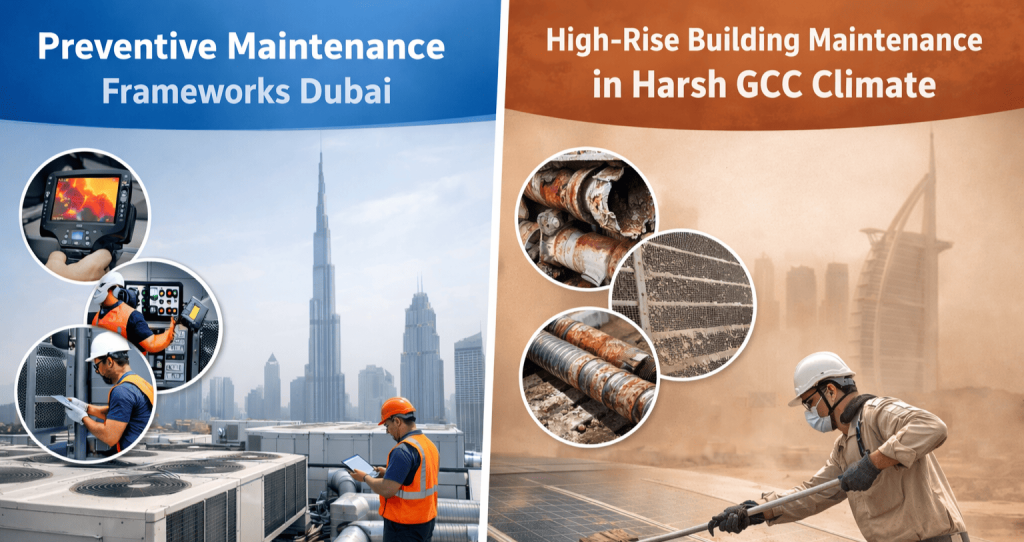
Preventive Maintenance for Dubai Buildings: A Practical Framework

Planning Preventive Maintenance in Dubai Preventive maintenance frameworks for Dubai buildings start with knowing the assets, their condition and the work needed to keep them serviceable. Heat, dust, humidity and exposure can affect different buildings in different ways. A useful plan sets priorities, assigns responsibility and records what was done, rather than promising a fixed saving or equipment lifespan. For developers approaching handover and owners reviewing an existing building, the first step is a complete set of asset records, warranties, manuals and outstanding defects. Sigma Homes’ project management support can help structure the discussion about transferring these responsibilities into day-to-day building management. Assessing Climate and Exposure Assess the building’s location, materials, age, usage and maintenance history. A coastal property, a heavily used mixed-use tower and a sheltered residential building may need different inspection priorities. Use a qualified technical assessment rather than a generic deterioration multiplier. High temperatures and solar exposure can affect cooling demand, seals, coatings and exposed materials. Record observed defects and have the relevant specialist determine the inspection and repair requirements for each system. Humidity, condensation and coastal exposure can contribute to moisture problems or corrosion, depending on materials and conditions. Investigate the cause of damage before selecting repairs; repainting a surface alone may not address the underlying issue. Dust accumulation can affect filters, coils and exposed equipment. Inspect and service equipment according to its condition and manufacturer instructions, with adjustments for the actual operating environment. Management Responsibilities and Approvals Common-area management should be planned within the applicable jointly owned property framework. Consult Dubai Law No. 6 of 2019, current authority guidance and the building’s approved documents when assigning responsibilities. Clarifying the Scope of Maintenance Distinguish common-area management from maintenance inside an individual unit and from obligations under a tenancy agreement. Confirm the responsible party before authorising work, and keep an escalation route for urgent defects or questions about responsibility. Budgets and Records Maintenance budgets, service-charge approvals and reserve arrangements need to follow the rules applicable to the property. Dubai Land Department’s jointly owned property FAQs explain Mollak and approved service-charge payment channels. Maintain supporting records so proposals and expenditure can be reviewed. Assessing Maintenance Costs The financial case for preventive maintenance should come from the property’s records: planned work, breakdowns, repair costs, downtime and consumption. Compare realistic options over the relevant period rather than applying an industry-wide savings ratio to every building. 1) Comparing Planned and Reactive Work 2) Recording Property Condition A documented maintenance history helps owners, contractors and prospective purchasers understand the property’s condition and past work. It does not establish a guaranteed resale premium or rental outcome. 3) Following Up Compliance Actions A maintenance plan can help organise inspections, approvals and follow-up. It cannot guarantee that a building will avoid every defect, penalty, shutdown or dispute. Track outstanding actions and obtain specialist advice where required. Core Building Systems 1) Building Envelope Inspect visible defects in the facade, sealants, windows, balconies and waterproofing as part of an agreed programme. A specialist should determine whether thermal imaging or other investigation is appropriate and how often it should be performed. Prioritise repairs by condition and risk. Record the defect, specification, contractor, warranty and completion evidence. Confirm access arrangements and the qualifications needed for work at height before works begin. 2) Cooling Systems Maintain cooling equipment using the manufacturer’s instructions and a competent contractor’s assessment. DEWA’s cooling guidance includes regular filter cleaning and measures to reduce avoidable cooling demand; it does not replace a maintenance specification for a particular system. For central plant and specialist equipment, agree inspection and servicing tasks with the responsible technical team. Record readings, defects and recommendations, and coordinate shutdowns with residents and other affected users. Use condition, performance, repair history and parts availability to assess equipment replacement. Maintenance may support continued serviceability, but a fixed additional number of operating years cannot be promised for every installation. 3) Electrical Installations Arrange electrical inspections and testing through appropriately qualified specialists. The scope and intervals should reflect the installation, manufacturer requirements, applicable authority requirements and assessed risks. Keep reports and promptly escalate identified hazards. 4) Water, Drainage and Fire Systems Plan plumbing, drainage, water-system and fire-protection maintenance with the relevant qualified contractors. Use the requirements applicable to each installation rather than a single schedule for every building. Record tests, certificates, defects and the person responsible for closing each action. Using Maintenance Technology A building management or maintenance system can help organise work orders, asset records and alerts. Check how the proposed system will be used by the team, who responds to alerts and how records will be exported if the supplier changes. Assess any technology proposal against a documented baseline and its full cost, including installation, subscriptions, training and support. Treat projected savings or reliability improvements as estimates until measured against the property’s actual records. Building a Practical Framework Build the framework around these five workstreams. Record equipment identifiers, location, installation date, warranty details, manuals, service history and current condition. Check the register against the equipment physically present at handover. Prioritise tasks according to safety, statutory requirements, operational impact and condition. Define how urgent faults reach the responsible person and how temporary measures will be reviewed. Build the budget from the asset register, contractor scopes, condition surveys and anticipated replacement needs. Use the approvals and reserve arrangements applicable to the property rather than a fixed percentage allocation. Check the contractor’s licence and any trade-specific approvals relevant to the work, insurance, personnel qualifications, references and proposed response arrangements. A community-management registration should not be treated as a substitute for every specialist contractor approval. Agree measures such as overdue tasks, repeat faults, response times and expenditure against budget. Set targets from the property’s baseline and service requirements, and explain how each measure will be calculated. Example: Reviewing an Existing Residential Tower For an existing residential tower, begin by reviewing recurring faults, incomplete records and outstanding inspection recommendations. This is a planning example, not a reported Sigma Homes case study or a claim of measured savings. Evidence to

Preventive Maintenance for Dubai Buildings: A Practical Framework Read More »